If you’re thinking about buying a motorhome but aren’t sure where to start, a proper test drive is your best friend.
Buying a motorhome is one of the biggest purchases you’ll make, and it’s very different from buying a regular car. You’re not just looking at how it drives, you’re evaluating what could become your home away from home for years to come. Taking time to test drive a motorhome gives you the chance to experience both the driving and living aspects before you commit.
Many people find that spending a few days in a motorhome gives them valuable insights into what they actually want and need. But whether you’re doing a quick test drive or have more time to evaluate, knowing what to look for can save you from expensive mistakes down the track.
Whether you’re considering spacious, luxury motorhomes or a more manageable small motorhome, here’s what you should focus on during your test drive to make sure you’re making the right choice.
Before You Even Start the Engine
Check Your Licence Requirements
Make sure you’re legally allowed to drive the motorhome you’re considering. Most motorhomes can be driven on a standard car licence, but larger models might require a special licence class, especially for those on an international driving permit. It’s worth checking this before you fall in love with something you can’t legally drive.
Walk Around and Get Familiar
Take time to familiarise yourself with the size and layout before you drive off the lot. Sit in the driver’s seat and adjust everything. Check your mirrors and get a feel for the visibility. Many first-time motorhome drivers are surprised by the different sight lines compared to a car, and by the additional size they’re now in command of.
Understand the Basic Controls
Ask about any controls that are different from a standard vehicle. Where are the indicators, hazard lights, and windscreen wipers? How do you adjust the mirrors? Some larger motorhomes have additional controls for things like levelling systems or slide-outs that you’ll want to understand, even if you don’t need to use them on your test drive.
On the Road: How Does It Drive?
Starting and Engine Response
Pay attention to how the engine starts and responds. It should start smoothly without excessive noise or vibration. When you accelerate, the response might be different from your car, especially if it’s a larger vehicle, but it should feel controlled and predictable.
Steering and Handling
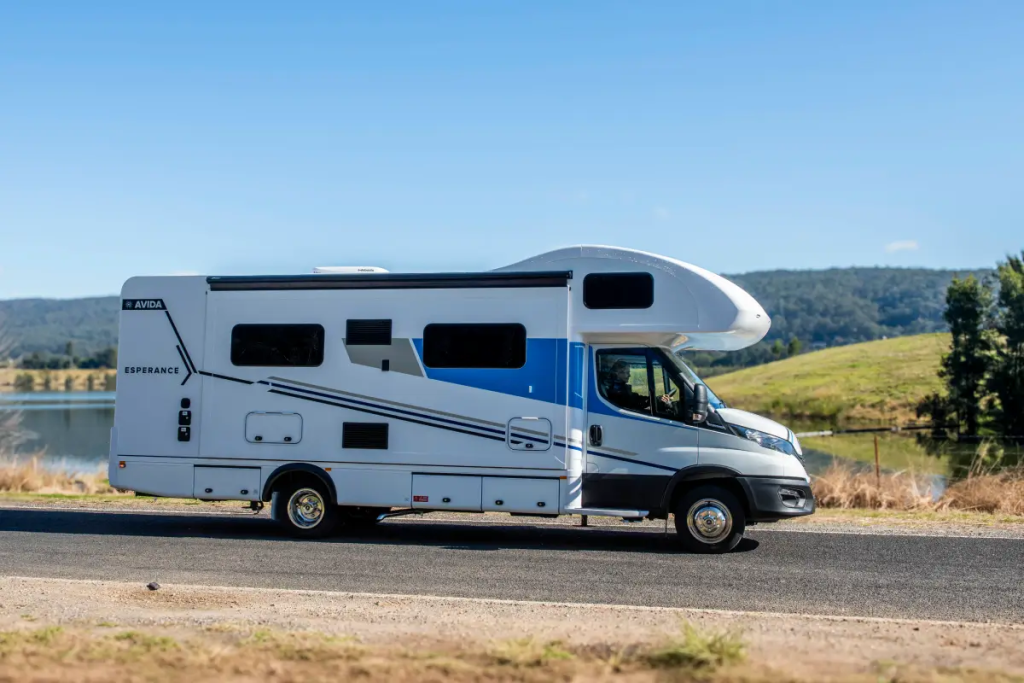
Motorhomes handle differently from cars, but the steering should still feel responsive and stable. Test how it feels at different speeds, and take it out on the motorway. The greater gross vehicle mass makes it less nimble than a car, but it shouldn’t feel unpredictable or require constant correction.
Braking Performance
Test the brakes gradually to get a feel for how much pressure is needed. Motorhomes are heavier than cars and need more distance to stop, but the braking should feel smooth and controlled. If you can, try taking it up and down some steep hills, and do a hill start to get a sense of how that extra weight feels when you’re behind the wheel. If the vehicle pulls to one side when braking, that’s a red flag.
Gear Changes and Transmission
Whether it’s manual or automatic, gear changes should be smooth. With a manual transmission, the clutch should engage predictably without slipping. Automatic transmissions should shift smoothly without harsh jolts or delays.
Visibility and Blind Spots
Take note of your visibility in all directions. Use your mirrors regularly and be aware of blind spots, which will be considerably larger on a motorhome than you’re used to. Many motorhomes have cameras or sensors to help, but you’ll want to understand what you can and can’t see clearly. And don’t just worry about what’s behind you: the larger windscreen pillars on a motorhome can block your view of oncoming traffic more than you’d expect.
Parking and Manoeuvring
Parking is one of the biggest differences to get used to in a motorhome, and one of the things new drivers struggle with the most. Try parking in as many different situations as you can and practice reversing somewhere with plenty of space, as this can be challenging in a larger vehicle. If you’re uncomfortable with the size, consider whether you’d be happy navigating tight caravan parks or city streets. You might find that a full-sized motorhome is more than what you’re after, in which case a campervan could be better suited to your needs.
Living Space: Your Home on Wheels
Layout and Flow
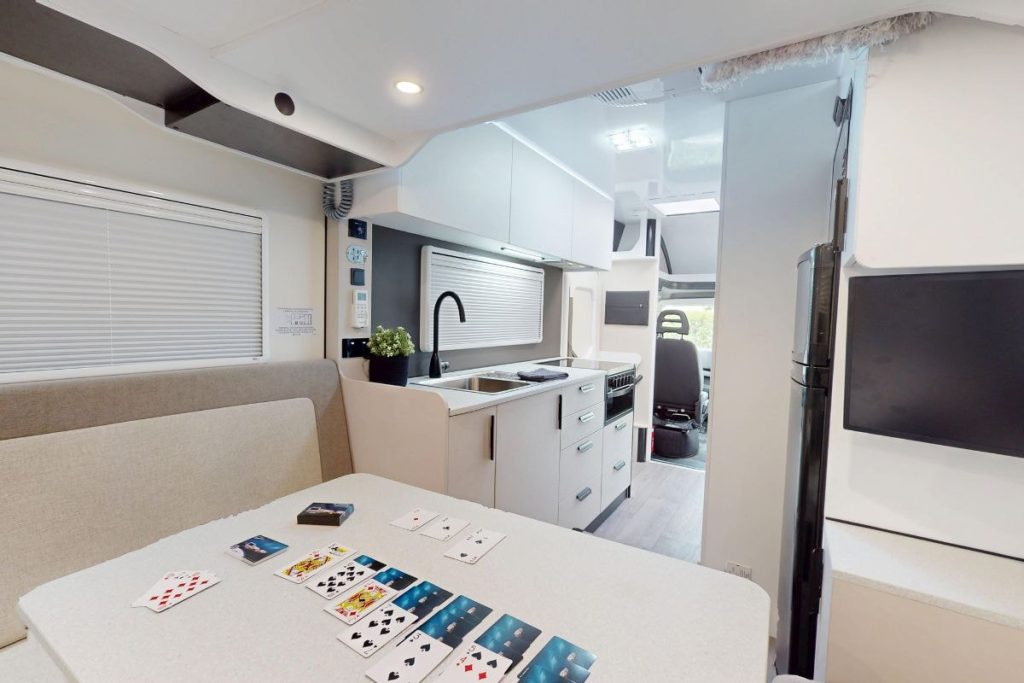
Walk through the living space and imagine what it would be like to actually use it for days, weeks or months at a time. Can you move around comfortably? Is the layout logical for how you’d live? Think about daily routines like cooking, sleeping, and relaxing. Does the space feel cramped or comfortable for the number of people who’ll be using it?
Storage Solutions
Open all the cupboards, drawers, and storage compartments. Is there enough space for your belongings? Are the storage areas easily accessible? Think about where you’d put clothes, food, equipment, and personal items. Good storage can make or break a trip, so don’t take a “she’ll be right” attitude to something that you know won’t work for you.
Kitchen Functionality
Test the kitchen and all the appliances. Turn on the gas, check the fridge, and look at the cooking space. Is there enough bench space for you to cook comfortably? Can you access everything you need easily? If you enjoy cooking and are planning to cook for yourself a lot on the road, this area needs to work well for you. More to the point, you can’t add or remove anything from the kitchen, so if it doesn’t work, you might need to look at a different model.
Bathroom and Toilet
Check the bathroom size and functionality. Can you use it comfortably? Test the shower, toilet, and basin. Most motorhomes will have full bathrooms with a separate shower and toilet, but some compact models will have a shower-over-toilet. Consider whether you’d be happy using these facilities daily or prefer to rely on external facilities most of the time.
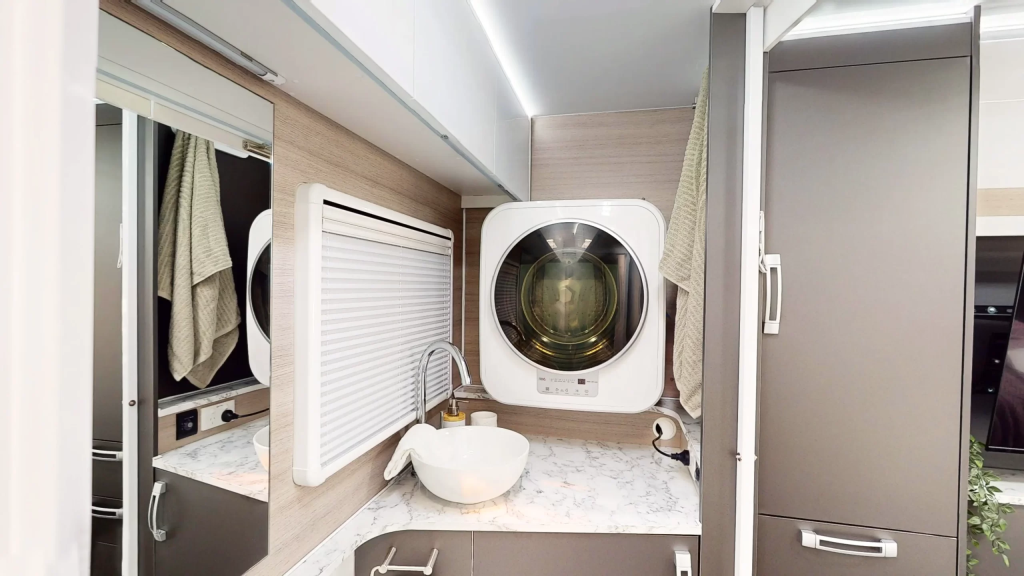
If you’re going to be travelling long-term, a motorhome with a washing machine onboard could be worth upgrading for, so think about how much time you’re willing to spend in laundromats if you don’t have one.
Sleeping Arrangements
At the end of every day, there’s nothing better than crawling into a proper bed. But there’s only one way to test a bed: lie down! Is it big enough for you? Is it comfortable enough? Can you access it easily or do you need to crawl across it every night when you want to go to sleep? If it’s a drop-down bed motorhome, test how easy it is to set the bed up.
If it’ll just be you and your significant other travelling together then those are the only people you need to think about. But what about grandkids? Not only do they need kid-friendly beds, but if they’re very young, you’ll need to check if the suits are compatible with booster seats for when you’re on the move.
Are you planning to have friends stay with you at any point? If so, then the kiddie beds aren’t going to cut it, so think about where they’ll sleep, how comfortable they’ll be, and whether or not the model you’re test driving will cut it.
Seating and Relaxation Areas
Driving is only half the time you’ll spend in your motorhome, and with any luck, you’ll be doing more relaxing than driving. Sit in all the seating areas and picture how they’ll be used: morning coffees, quick lunch stops, or extended dinner parties? Are they comfortable for extended periods? Can you relax and properly enjoy the space?
For many owners, their motorhome becomes an extension of their normal home, so think about what your evening routine looks like. Will you be reading or watching TV? Whatever it is, you want the living area to feel welcoming, not cramped.
Technical Systems and Features
Water Systems
Although you shouldn’t have any problems, especially with a new motorhome, you still want to check that the taps work properly and the water pressure is adequate. Test both hot and cold water, as you don’t want to be waiting an age for the hot water to come through when you’re off-grid and relying on your water tanks.
Look at the water tank capacity and do some rough calculations to see whether it’s sufficient for the type of travel you’ll be doing. Water capacity becomes more important if you plan to stay at unpowered sites frequently, and will be the limiting factor in terms of how long you can stay away.
Electrical Systems
Test all the lights, power points, and any electrical appliances. Check the 12V and 240V systems if the motorhome has both. If it’s a solar motorhome with solar panels and batteries, make sure you understand how they work, what they power, and how long you can expect to stay off-grid for.
Gas Systems
Although some motorhomes are increasingly all-electric, many of the models on the market still rely on gas for cooking and hot water. If the model you’re looking at is one of those, give it a good test. Check that gas bottles are easily accessible when you need to replace them, and understand the safety features and how to shut off gas in an emergency.
Heating and Cooling
No matter where your journey leads, you’re going to want good heating and cooling. A lot of modern motorhomes come with both air conditioning and diesel heaters, so you’ll want to test them both. Think about where you’ll be travelling and whether the systems are adequate for your needs.
Levelling and Stabilising
If the motorhome has levelling jacks or stabilisers, and you feel comfortable doing so, test how they work. These can make a big difference to your comfort when parked, especially for longer stays.
What to Listen and Feel For
Unusual Noises
Pay attention to any unusual sounds while driving or when systems are running. Rattling, grinding, or squealing noises could indicate problems. Some road noise is normal in a larger vehicle, but excessive noise might suggest issues.
Vibrations
Feel for any unusual vibrations through the steering wheel, pedals, or throughout the vehicle. Some vibration is normal, especially in older vehicles, but excessive shaking could indicate mechanical problems.
Warning Lights
Keep an eye on the dashboard for any warning lights. If anything illuminates during your test drive, ask about it immediately.
Questions to Ask
Warranty and Support
Understand what warranty coverage exists and what support is available if things go wrong. This is particularly important for complex systems like refrigeration or electrical setups.
Real World Fuel Consumption
Ask about realistic fuel consumption figures for the type of driving you’ll be doing. Fuel is one of the biggest expenses when you’re travelling in a motorhome, so understanding this helps with budgeting.
Known Issues
Ask if there are any known issues with the specific model or age of motorhome you’re considering. Honest dealers will share common problems and how they’re typically addressed.
Trust Your Instincts
Does It Feel Right?
Beyond all the technical checks, consider how the motorhome makes you feel. Can you imagine yourself being comfortable in it for extended periods? Does it suit your travel style and personality?
Comfort Level
Be honest with yourself about how comfortable you feel with the motorhome’s size and complexity. If you’re feeling overwhelmed during the test drive, you might want to consider something simpler to start with, like a small campervan or a campervan with shower and toilet.
Future Needs
Think about how your needs might change throughout your time as an owner. Will this motorhome still suit you in a few years’ time? Are you likely to want to upgrade or downsize?
After the Test Drive
Take Notes
Write down your impressions while they’re fresh. What did you like? What concerned you? How did it compare to other motorhomes you’ve looked at?
Compare Options
If you’re looking at multiple motorhomes, make sure you’re comparing like with like. Consider not just the purchase price, but ongoing costs like fuel, insurance, and maintenance.
Do Your Research
Look up reviews of the specific model online. Other owners’ experiences can give you insights into long term reliability and common issues.
Consider a Longer Trial
If possible, consider spending more time with the motorhome. Some people find that doing a motorhome hire for a short holiday gives them a much better understanding of what they want and need than a brief test drive alone. So if you’re still undecided, find some motorhome rental companies and book some annual leave to get a better feel for things.
Make the Right Choice with Avida
A thorough test drive takes time, but it’s time well spent. You’re evaluating both a vehicle and a lifestyle choice, so don’t rush the process. The right motorhome should feel comfortable to drive, pleasant to live in, and suitable for your road trip.
Remember, there’s no perfect motorhome, but there is one that’s right for you. Take your time, ask questions, and trust your instincts. The confidence you gain from a proper test drive will serve you well.
At Avida, we’ve been helping Aussies explore this incredible country and its iconic landscapes for 60 years. With an extensive range of motorhomes for sale and campervans for sale, we’ve got something for first-time owners and old hands alike. Wherever you’re travelling, explore our selection today and find the right vehicle at Avida and start planning your next adventure today!